
Table of Contents
- What Sets Handcrafted Canvas Art Apart from Mass-Produced Prints
- Handcrafted vs Mass Produced Canvas Art: Side-by-Side Comparison
- Original Oil Painting vs Canvas Print: Understanding the Spectrum
- Benefits of Buying Handmade Art Beyond the Aesthetic
- How to Identify Mass Produced Art Before You Buy
- Environmental Impact and Decor Longevity
- Maintenance, Restoration, and Getting the Most from Your Canvas
- Which Should You Choose for Your Home?
Last Updated: August 15, 2026
What Sets Handcrafted Canvas Art Apart from Mass-Produced Prints
Handcrafted canvas art is the product of deliberate, skilled production where human judgement shapes every stage, from material selection to final quality check. Mass-produced art uses automated digital printing to minimise cost and maximise volume. The gap becomes obvious side by side: mass-market decor tends to look flat, while handcrafted pieces have presence.
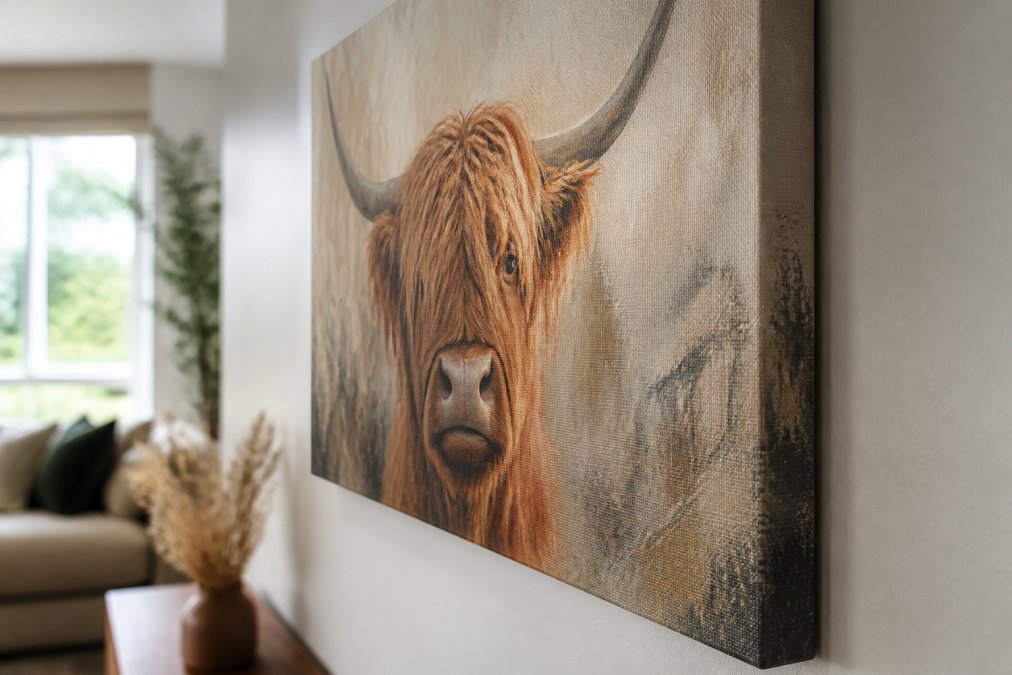
Canvas Texture, Tactile Depth, and Material Quality
Handcrafted pieces typically use natural fibre canvas, cotton or linen, chosen for weave density and pigment retention. The canvas weave creates subtle, tactile depth that gives the finished piece a three-dimensional quality. Mass-manufactured prints often use synthetic materials with finer, more uniform weaves that remove the visual interest of original artwork. Under direct light, quality handcrafted canvas catches and reflects light in ways synthetic prints cannot.
Artisan framing also shows in solid wooden frames with mitered corners, gallery-wrapped so the image continues around edges. Budget mass-market decor uses thinner frames prone to warping.
Color Fidelity, Pigment Stability, and Archival Quality
Handcrafted canvas prints with archival-quality pigment inks hold colour significantly better than mass-market alternatives. Archival pigments resist UV degradation, retaining original tones for many years. According to the Fine Art Trade Guild's guidance on archival standards, archival quality materials are the baseline requirement for artwork intended to last a generation.
Mass-produced prints often use dye-based inks, which are cheaper but have lower pigment stability and greater UV vulnerability. A print hung near a window can show visible colour shift within a year or two. Giclee printing, when done properly on quality canvas with archival pigment inks, produces colour fidelity rivalling hand-painted originals, though the term is sometimes applied loosely to standard digital printing.
Handcrafted vs Mass Produced Canvas Art: Side-by-Side Comparison
| Factor | Handcrafted Canvas Art | Mass-Produced Canvas Art |
|---|---|---|
| Canvas material | Natural fibre (cotton/linen) | Often synthetic blend |
| Ink type | Archival pigment inks | Frequently dye-based inks |
| UV resistance | High (archival quality) | Low to moderate |
| Tactile depth | Visible canvas weave, texture | Smooth, flat surface |
| Frame quality | Solid wood, gallery-wrapped | Lightweight, prone to warp |
| Production volume | Low, curated | High, automated |
| Colour fidelity | Precise, consistent | Variable |
| Longevity | Many years, minimal fading | Fades within 2-5 years |
| Bespoke options | Common | Rare |
| Price range | Higher, reflects materials | Lower, reflects volume |
Mass-produced art serves a purpose for temporary spaces and rentals. The problem arises when buyers pay mid-range prices expecting handcrafted quality and receive mass-market results.
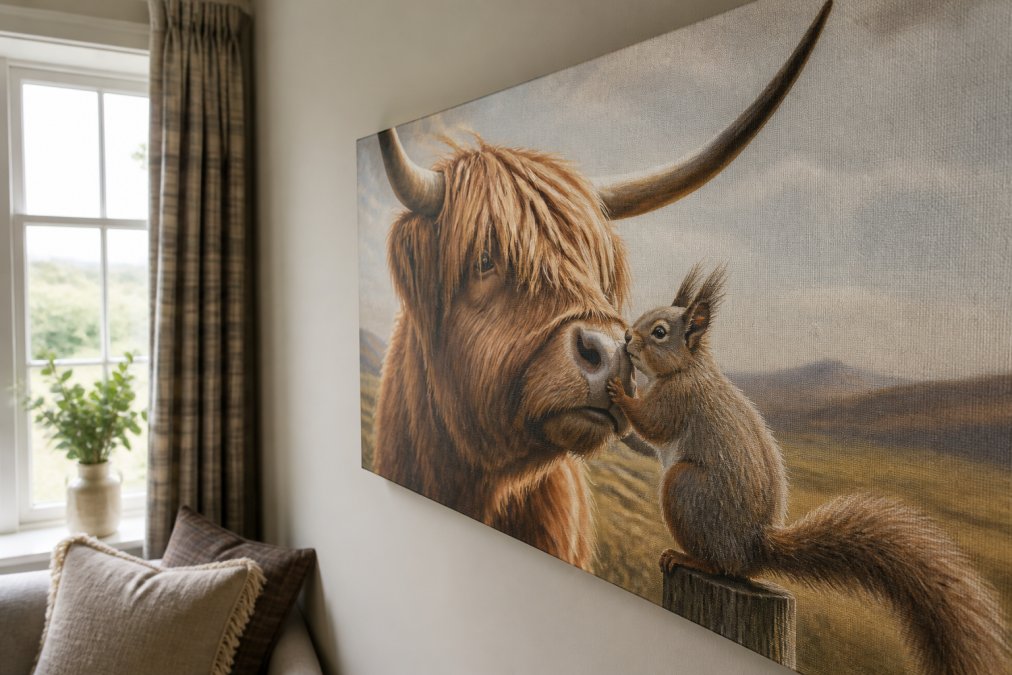
Original Oil Painting vs Canvas Print: Understanding the Spectrum
Original artwork is a unique object with impasto technique creating physical texture no print can replicate. Canvas prints, including high-quality handcrafted ones, are reproductions. A well-executed giclee print on archival canvas with pigment inks can be genuinely beautiful and hold its own in any room.
The spectrum runs from original one-of-a-kind works through limited edition prints to open-edition handcrafted canvas art, and finally to mass-market print-on-demand products. Knowing where a piece sits helps you match expectations to budget.
Benefits of Buying Handmade Art Beyond the Aesthetic
Investment Value and Long-Term Appreciation
Most canvas prints do not appreciate like original artworks. Original works by known artists, particularly limited editions, have documented value appreciation. As noted by Arts Council England's guidance on art as investment, value is tied to scarcity, provenance, and artist reputation.
Handcrafted canvas art offers decor longevity. A piece made with archival materials looks as good in fifteen years as today. A mass-produced print may need replacing within five. Over ten years, the cost-per-year calculation often favours the higher-quality piece.

Psychological Impact and the Feel of a Space
Research in environmental psychology finds that objects we choose affect mood, identity, and space experience. A handcrafted print with genuine visual character registers differently than generic mass-market images, creating a focal point that anchors a room and signals curation rather than assembly.
According to research on art and wellbeing from the University of Westminster, engaging with visual art in domestic settings is associated with reduced stress and improved wellbeing.
How to Identify Mass Produced Art Before You Buy
Authenticity Verification: What to Look For
Check product listings for these specifics:
- Ink specification: Does the listing state archival pigment inks? Vague language like "high-quality inks" is a warning sign.
- Canvas material: Natural cotton or linen is standard for quality pieces. Synthetic blends are cheaper and less durable.
- Frame construction: Solid pine or hardwood stretcher bars with gallery-wrapped edges and mitered corners indicate proper construction. Thin MDF or chipboard frames do not.
- Production method: Legitimate handcrafted pieces describe the production process. Vague language like "professionally printed" without detail is a common indicator of mass production.
- Edition size: Limited edition pieces should state edition numbers. Claims of limited availability without numbers warrant scepticism.
- Return policy: Providers confident in quality offer clear returns. Vague or restrictive policies are a practical red flag.
Environmental Impact and Decor Longevity
Mass-produced wall art carries significant environmental footprint when accounting for full lifecycle. The key metric is replacement cycle. A mass-produced print fading within three to five years generates more waste than a handcrafted piece lasting decades. Over twenty years, a household buying quality once generates significantly less waste than one replacing cheap prints every few years.

Synthetic canvas materials also present disposal challenges. Natural fibres are biodegradable; synthetic blends are not. Decor longevity is both an environmental and interior design argument, a piece holding colour and structural integrity becomes part of a space's identity rather than a placeholder needing periodic refreshing.
Maintenance, Restoration, and Getting the Most from Your Canvas
Handcrafted canvas on archival materials is low-maintenance by design.
Cleaning: Dust gently with a soft, dry brush or lint-free cloth. Never use water or cleaning products directly on canvas.
Light exposure: UV radiation causes colour shift. Archival pigment inks offer significant UV resistance, but positioning pieces away from direct sunlight remains best practice. UV-filtering glass adds additional protection.
Humidity and temperature: Canvas responds to humidity changes by expanding and contracting. Consistent temperature and moderate humidity are ideal. Avoid hanging directly above radiators or in damp rooms.
Re-stretching: If canvas develops sag over many years, professional re-stretching is possible without image damage. Mass-produced pieces on thin frames cannot accommodate this.
Restoration: Genuine damage can be addressed by professional art restorers. Archival material quality makes restoration feasible in ways impossible with cheap synthetic prints.
Which Should You Choose for Your Home?
For permanent spaces, including owned homes and long-term rentals, handcrafted canvas art on archival materials is the right choice. Quality difference is visible, longevity is measurable, and psychological impact is real.
For temporary spaces and short-term rentals, mass-produced prints serve their purpose. Be clear with yourself about which situation you are in.
| Use Case | Recommended Choice |
|---|---|
| Permanent home, focal wall | Handcrafted, archival quality |
| Housewarming or special gift | Handcrafted, bespoke subject |
| Short-term rental or temporary space | Mass-produced, budget tier |
| Scottish heritage or themed decor | Handcrafted, limited edition |
| First-time buyer personalising a space | Handcrafted, starting collection |
| High-turnover commercial space | Mass-produced, replaceable |
Ben Ledi Print Media sits firmly in the handcrafted category. Each piece, including the Highland Cow Whimsical Framed Canvas Wall Art and Ronnie's Bothy Highland Cow canvas, is produced on premium canvas with high-quality pigment inks and arrives ready to hang. The Scottish-themed collection is designed for buyers wanting genuine character and decor longevity.

For anyone buying art as a gift, handcrafted pieces communicate thought, quality, and permanence in ways mass-market prints cannot. As documented in the Design Council's guidance on quality and value in home interiors, pieces people keep and value combine aesthetic appeal with material integrity.
Browse the Ben Ledi Print Media collection and find a piece that belongs in your space, not just on your wall.
Frequently Asked Questions
Is handmade art better than mass-produced prints?
Handcrafted canvas art typically offers superior material quality, genuine tactile depth, and greater decor longevity than mass-market prints. Each piece carries artisan craftsmanship rather than being replicated at production volume. That said, a high-quality handcrafted canvas print, produced with archival pigment inks on premium natural-fibre canvas, can deliver the visual richness of original artwork at a more accessible price point, making it a practical middle ground for most homeowners.
How can you tell if a painting is original or a print?
Look closely at the surface under raking light. Original oil paintings show raised impasto texture, visible brushstrokes, and slight irregularities across the canvas weave. Mass-produced prints appear flat and uniform, with a repeating dot or grid pattern visible under magnification. Handcrafted canvas prints occupy a middle ground: the canvas texture is real, the pigment is applied with precision, but the image itself originates from a digital file rather than a hand-painted original.
Does original art hold its value better than mass-produced prints?
Original artwork, particularly limited-edition or signed pieces, generally holds or appreciates in value over time, while mass-market decor depreciates quickly. High-quality handcrafted canvas prints using archival pigment inks and UV-resistant coatings retain their visual appeal for decades, making them a sound long-term investment for interior styling even if their monetary resale value differs from one-of-a-kind originals.
What type of canvas do professional artists use?
Professional artists typically favour natural-fibre canvases, usually cotton or linen, primed with gesso to create the right surface for oil or acrylic paints. For high-quality printed canvas art, a tightly woven cotton or poly-cotton blend canvas is standard, chosen for its consistent surface texture and ability to hold archival pigment inks without colour shift over time. The canvas weave weight and primer quality directly affect both the tactile appeal and the longevity of the finished piece.
This article was written using GrandRanker