
Table of Contents
- Why Scottish Landscape Canvas Prints Transform a Room
- Choosing the Best Scottish Scenery for Home Decor
- How to Style Landscape Canvas Prints by Room
- Sizing and Placement: Getting the Dimensions Right
- The Quality Behind Handcrafted Canvas Art in Scotland
- Caring for Your Scottish Landscape Canvas Prints
- Bring the Highlands Home: Start Browsing
- Frequently Asked Questions
Last Updated: September 9, 2026
There is a quiet magic in bringing the Scottish Highlands into your home. A well-chosen piece of wall art does more than fill an empty wall; it sets the entire mood of a room. At Ben Ledi Print Media, we craft Scottish landscape canvas prints that capture the misty mountains, glassy lochs, and dramatic glens. This guide will help you choose, style, and care for canvas art that turns a house into a home.
Why Scottish Landscape Canvas Prints Transform a Room
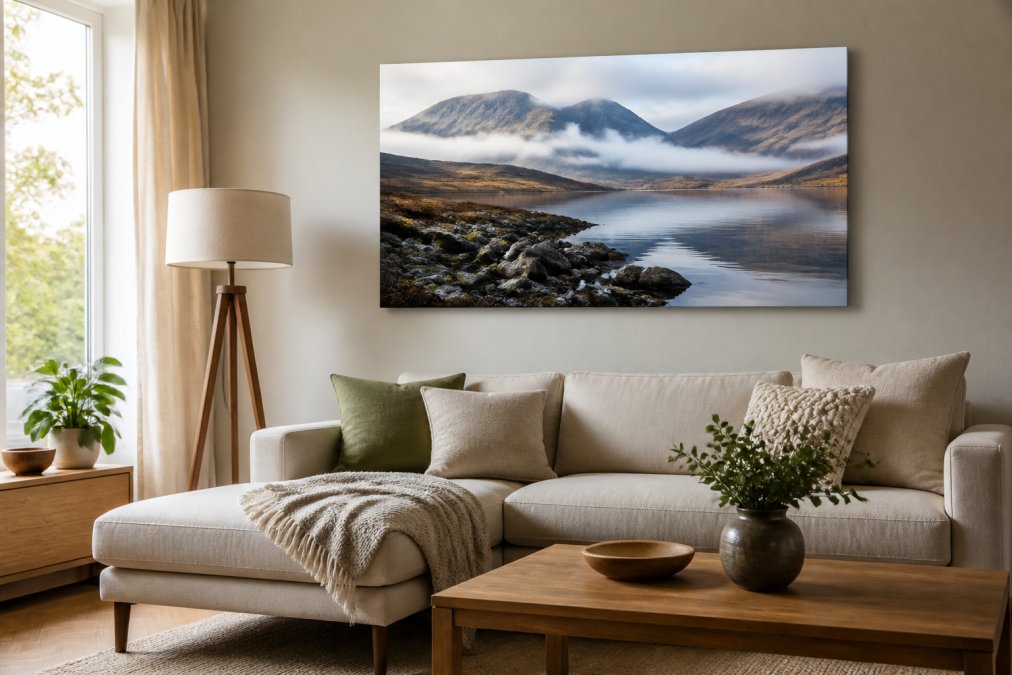
Scottish landscape canvas prints are more than decoration; they are a window to somewhere tranquil. A single large piece depicting a moody Highland vista can anchor a living space, introducing a natural colour palette of deep greens, slate blues, and soft greys that ground your furniture. The texture of the canvas and the artistic interpretation of the scenery add depth that a standard poster simply cannot match.
The visual impact is immediate. Whether it is the rugged form of Ben Ledi or the serene surface of Loch Katrine, the right image creates a focal point that draws the eye and invites conversation. Interior designers often recommend nature-inspired art for its calming effect, and Scottish scenery offers some of the most dramatic and soothing imagery available. This is about creating a daily escape into the scenic beauty of the Highlands without leaving your living room.
Choosing the Best Scottish Scenery for Home Decor
Selecting the right scene is a personal journey, but understanding the character of different landscapes helps. The best Scottish scenery for home decor depends on the atmosphere you wish to create. Do you want a tranquil, airy feel, or a dramatic, moody statement? The geography of the Trossachs offers both.
The Timeless Appeal of the Trossachs and Loch Lomond
The Trossachs, often called "The Highlands in Miniature," offer a perfect blend of forest, loch, and mountain. Scenes of Loch Lomond with its islands and shimmering water bring a sense of openness and calm. These images work beautifully in rooms with light, airy colour schemes, where the blue and green tones of the water and hills can breathe life into the space. A panoramic view of these glens can make a small room feel larger and more expansive, connecting your interior to the wider world outside.
Highland Wildlife and Rustic Bothies
For a more rustic aesthetic, consider artwork that pairs the landscape with its iconic inhabitants. A composition featuring a Highland cow or a red deer stag beside a traditional bothy captures the heritage and wild spirit of Scotland. These pieces often carry a warmer, more textured feel, making them ideal for studies, snug corners, or kitchens. They blend the raw beauty of the terrain with a sense of homely shelter. The artistic interpretation in these prints adds character, making them a talking point rather than just background scenery.

How to Style Landscape Canvas Prints by Room
Once you have chosen your scene, the next step is placing it effectively. Styling landscape canvas prints goes beyond hanging them at eye level; it is about harmonising the art with the room's purpose, lighting, and palette. A thoughtful approach can make the difference between a print that merely decorates a wall and one that transforms the entire atmosphere of a space.
Living Room Focal Points and Colour Palettes
In the living room, think of your canvas as the anchor. A large, statement piece featuring dramatic cliffs or a moody mountain pass works best above a fireplace or a long sofa. The scale of the artwork should relate directly to the furniture beneath it; a common rule of thumb is that the canvas should cover roughly two-thirds to three-quarters of the sofa's width. This proportion creates a sense of balance and ensures the art feels intentional rather than lost on the wall.
Colour theory plays a crucial role here. Scottish landscapes are dominated by cool, muted tones, slate blues, heather purples, moss greens, and soft greys. These hues naturally complement a range of interior styles. For a modern, minimalist room, a print with a dominant grey or silver palette can echo the clean lines of contemporary furniture. In a more traditional setting, the deep greens and earthy browns of a forest or glen scene harmonise beautifully with wood furniture and rich fabrics.
Consider the lighting in your room as well. North facing rooms receive cooler, softer light, which can make the blues & greens can make a loch seen even more tranquil. South facing rooms with a warm bright light can benefit from a warmer tones such as sunset over the Trossachs or a golden autumn scene. If your print features the cool tones of winter highland scene, pair it with clean lines and textured fabrics in complimentary slate blue or soft greys to make the art the hero of the room. Hallways, Studies and Bedrooms
Hallways are ideal for a series of smaller prints that tell a story, guiding the eye along the wall. When creating a gallery wall, maintain a consistent gap of around 5-7cm between frames to create a cohesive look. Mixing orientations, a vertical print of a waterfall alongside a horizontal panoramic view, adds visual interest and makes the most of narrow spaces.
In a study, a calming loch scene can provide a moment of respite during a busy day. Choose a print with a sense of depth, such as a view across Loch Lubnaig towards the mountains, to give your eye somewhere to rest when you look up from your work. For bedrooms, opt for tranquil scenes with soft light and glassy lochs to promote relaxation. The key is to avoid visual clutter; let the canvas provide the focal point without competing with busy wallpaper or excessive ornaments. A ready-to-hang canvas simplifies this process, allowing you to adjust placement until it feels just right.
Sizing and Placement: Getting the Dimensions Right
A common mistake is choosing a canvas that is too small for the wall. As a rule of thumb, a large piece of art should cover roughly two-thirds to three-quarters of the width of the furniture beneath it. For a standard three-seater sofa, this often means a canvas wider than 100cm. Measure your wall space carefully before ordering.
Explore Our Scottish Wall Art →
Room / Area |
Recommended Size |
Placement Tip |
|---|---|---|
Above Sofa |
Large (100cm+) |
Centre over the sofa, 15-20cm above the back |
Hallway Wall |
Medium |
Eye level, or a vertical series for height |
Small Bedroom |
Medium |
Above the bedhead or opposite the foot of the bed |
Study / Nook |
Small to Medium |
At eye level when seated |
If you are unsure, custom dimensions can help fit an awkward space perfectly. Remember, the centre of the artwork should typically hang at eye level, around 145cm from the floor. Getting this right ensures your chosen piece has the intended visual impact.
The Quality Behind Handcrafted Canvas Art in Scotland
The difference between a print that fades and one that lasts lies in the craftsmanship. Handcrafted canvas art should offer more than just a pretty image; it must be built to endure, resisting fading and warping over time.
Pigment Inks, Gallery Wrap and Ready-to-Hang Frames
Quality begins with the materials. Pigment inks offer excellent colour quality resistance to fading over time, preventing the colours from washing out over years of display. A gallery wrap means the canvas is stretched taut around the wooden frame, creating a clean, frameless look that is modern and sleek. The frame itself must be sturdy to prevent warping, ensuring the print remains flat and true. When a piece arrives ready to hang, it takes the guesswork out of framing and lets you enjoy your new artwork immediately, secure in the knowledge that the craftsmanship will stand the test of time.
Caring for Your Scottish Landscape Canvas Prints
Canvas prints are durable, but they are not indestructible. Proper care ensures your artwork remains a vibrant tribute to the Highlands for decades. While most guides overlook this topic, understanding the simple maintenance routines and environmental factors that affect canvas longevity will protect your investment and keep your print looking as fresh as the day it arrived.
Daily Dusting and Gentle Cleaning
The most important habit is regular dusting. Dust particles can settle into the weave of the canvas and, over time, dull the colours. Use a soft, dry microfiber cloth or a clean, dry paintbrush to gently wipe the surface once a week. For a low-suction vacuum cleaner, you can use the brush attachment, but hold it slightly above the surface to avoid pulling the canvas fibres. Avoid using water, cleaning sprays, or damp cloths on the canvas itself, as moisture can seep into the fibres and cause warping or mildew, especially in cooler climates.
Protecting Against UV Light and Sun Damage
Even the highest quality pigment inks will eventually fade if exposed to harsh, direct sunlight for many hours each day. The sun's ultraviolet (UV) rays are the primary culprit. To protect your print, avoid hanging it directly opposite a large, south-facing window. If your room has abundant natural light, consider using blinds or curtains to diffuse the strongest midday sun. For particularly bright rooms, you might also consider a UV-protective glass or acrylic cover if you choose a framed option, though a standard gallery-wrap canvas is best kept out of the most intense light paths.
Managing Humidity and Temperature
Fluctuations in humidity and temperature can cause the wooden frame of a canvas to expand and contract. Over time, this can lead to the canvas becoming loose or developing a slight bow. To prevent this, avoid hanging your print in rooms with high humidity, such as directly above a radiator, in a steamy bathroom, or near a kitchen hob. The ideal environment is a room with stable, moderate temperature and humidity, typically between 40% and 60% relative humidity. If you live in an area with high seasonal humidity, a dehumidifier in the room can help maintain a stable environment for your artwork.
Handling and Moving Your Canvas
When moving or cleaning your canvas, always handle it by the wooden frame on the back, rather than the canvas surface itself. This prevents accidental dents or creases. If you need to store a canvas, keep it upright and wrap it in a clean, acid-free paper or a breathable fabric cover. Avoid storing it in an attic or basement where temperature and humidity fluctuate dramatically.
Bring the Highlands Home: Start Browsing
Choosing the perfect canvas is about finding the piece that speaks to you. Whether it is the rugged peaks of Glen Ample or the serene wildlife scene of Glendale, the right artwork turns a wall into a story. We invite you to browse our collection of Scottish landscape prints and discover a piece that brings a touch of the Trossachs into your home.
Frequently Asked Questions
How do I choose the right size canvas print for my living room?
Measure your wall space and aim for the canvas to cover roughly two-thirds to three-quarters of the width of your sofa or furniture piece below it. For most living rooms, a single large statement piece works better than several small ones. Leave at least 15-20 cm of breathing space around the edges. If you are unsure, use painter's tape on the wall to map out the dimensions before ordering. Our Glen Ample canvas, for instance, measures 50x35 cm, a versatile size for smaller walls or grouped arrangements.
What makes Scottish landscape canvas prints a popular choice for interior decor?
Scottish landscape canvas prints bring a sense of calm and natural beauty indoors. The muted greens, blues and greys of the Highlands pair effortlessly with neutral interiors, while dramatic peaks and glassy lochs add visual depth. These prints suit a wide range of homes, from modern apartments to traditional cottages. They also offer a connection to a specific place, making them meaningful additions rather than generic wall fillers. The scenic variety, from misty mountains to tranquil lochs, means there is a style to match nearly any colour palette.
Why is local craftsmanship important when buying Scottish landscape art?
Handcrafted canvas art often uses archival-grade inks and gallery-wrapped edges, so the print resists fading and stays taut on its frame. When you choose a handcrafted piece, you are getting a product made with care, not a mass-produced item from overseas.
Can I hang these canvases if I am renting my home?
Yes. Most of our canvas prints arrive ready to hang with a pre-fitted frame and hanging hardware. They hang from a single nail or picture hook, which leaves only a small hole that is easy to fill when you move out. Because the canvases are lightweight, you do not need heavy wall anchors in most cases. This makes them ideal for renters who want to personalise their space without causing lasting damage. You can also reposition them easily as you settle into a new layout.