
Table of Contents
- Why Handcrafted Canvas Matters
- Custom Pet Portrait Canvas Print Services That Rival Printerpix
- Best Custom Canvas Printing Services for Premium Wall Art
- DIY Handcrafted Canvas: Creating Your Own Wall Art
- Print Quality, Resolution, and Material Selection
- Handcrafted Texture Techniques and Sustainability
- Canvas vs. Paper: Choosing the Right Format for Your Print
- Conclusion
Last Updated: August 23, 2026
Why Handcrafted Canvas Matters
The difference between mass-produced wall art and handcrafted canvas lies in intention. Each piece carries the mark of craftsmanship, whether that's visible brushwork, carefully selected materials, or custom design elements that reflect your specific vision.
Ben Ledi Print Media understands this distinction. Their handcrafted canvas prints combine meticulous design with premium materials to create wall art that transforms a room. People invest in handcrafted canvas for three key reasons: longevity (quality materials resist fading and deterioration), customization (creating exactly what you envision), and emotional value (owning something made with care adds depth that off-the-shelf prints cannot replicate).

Custom Pet Portrait Canvas Print Services That Rival Printerpix
True custom pet portrait canvas print services create original artwork that captures your pet's personality, not just photo transfers. Ben Ledi Print Media stands out because each piece involves thoughtful artistic interpretation, where the artist considers your pet's unique features and the mood you want to convey.
When evaluating custom pet portrait canvas print services, consider:
- Artistic interpretation: Does the service create original artwork or simply enlarge and transfer your photo?
- Material quality: Are they using archival-grade inks and premium canvas that resist fading?
- Customization depth: Can you request specific colors, styles, or artistic approaches?
- Communication: Do they show you proofs or sketches before finalizing the piece?
Ben Ledi Print Media's approach emphasizes direct collaboration. Their handcrafted pieces start at £27.00, positioning them competitively while maintaining quality standards that make custom work worthwhile.
Best Custom Canvas Printing Services for Premium Wall Art
Premium wall art demands attention to color accuracy, material selection, printing technology, and design sophistication. The distinction between "good" and "premium" custom canvas printing services often comes down to color management, premium services use color profiles that match your monitor to the final print, ensuring what you see on screen translates accurately to canvas.
Material selection separates premium services from standard ones. Quality custom canvas printing services use:
- Canvas weight and weave: Heavier canvas (typically 400+ gsm) resists sagging and deterioration (iso.org)
- Ink formulation: Archival-grade pigment inks maintain color integrity for decades
- Substrate preparation: Premium services prime and treat canvas to accept ink uniformly
- Stretching and framing: Professional-grade construction ensures tight corners and clean edges
Ben Ledi Print Media exemplifies this premium approach, using high-quality pigment inks and superior canvas materials designed for longevity. Each print is ready to hang, eliminating uncertainty.
| Consideration | What to Look For | Why It Matters |
|---|---|---|
| Color accuracy | Proof options before final print | Ensures your vision translates to the final piece |
| Material quality | Archival inks and premium canvas | Protects against fading and deterioration over years |
| Customization | Original design or artistic interpretation | Creates uniqueness rather than generic results |
| Turnaround time | Realistic delivery windows | Allows planning for gifts or deadlines |
| Mounting/framing | Professional stretching or frame options | Delivers ready-to-hang convenience |
DIY Handcrafted Canvas: Creating Your Own Wall Art
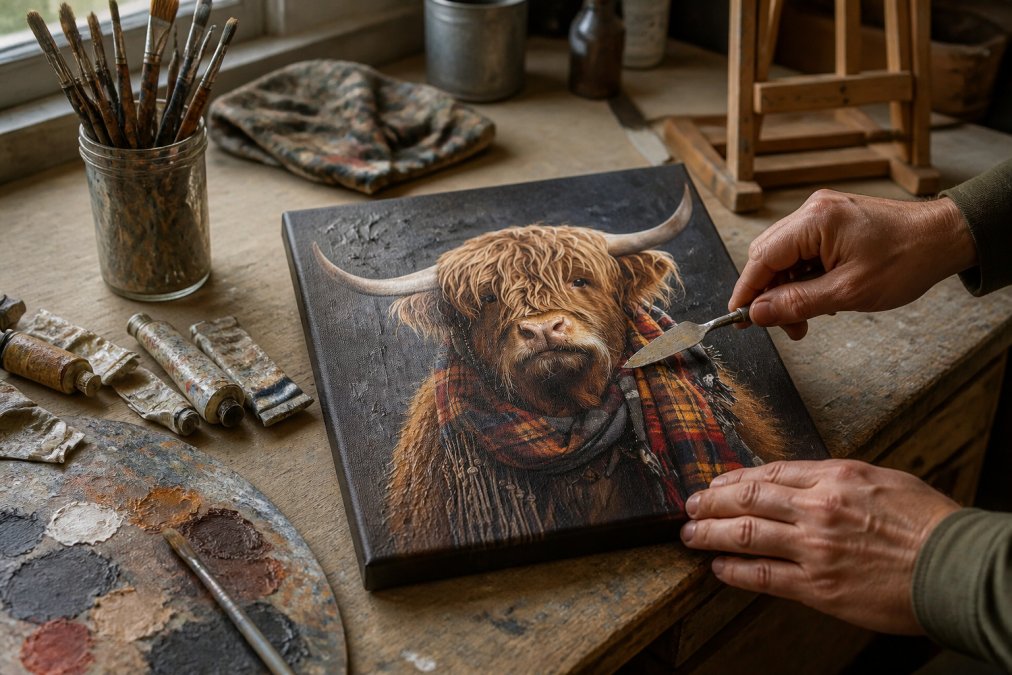
Creating your own handcrafted canvas allows complete creative control and personal investment. DIY canvas creation ranges from simple photo transfers to elaborate hand-painted designs, each offering different rewards.
What You'll Need for DIY Canvas Creation
Essential materials include:
- Canvas substrate: Stretched canvas, canvas boards, or canvas panels
- Paints or inks: Acrylic paints, watercolors, or specialty inks
- Brushes and applicators: Various sizes for detail work and broad strokes
- Adhesives: Mod Podge or similar medium for collage or photo transfer
- Sealant: Matte or glossy varnish to protect finished work
- Texture materials: Sand, fabric, mixed media elements for dimensional effects
Step-by-Step Custom Canvas Creation Process
Step 1: Prepare Your Design [Time: 30-60 minutes]
Decide what you want to create and sketch your idea on paper, working out proportions and composition. Transfer your design to canvas using graphite paper for precise line work or a projector to trace the outline directly.
Step 2: Prepare Your Canvas [Time: 15-30 minutes]
Apply a primer or gesso base coat to create a uniform surface that accepts paint evenly and improves color vibrancy. Allow the primer to dry completely.
Step 3: Apply Base Colors [Time: 45 minutes to 2 hours]
Begin with your lightest colors and broader areas, working systematically from background to foreground. Allow each layer to dry before adding details.
Step 4: Add Details and Texture [Time: 1-3 hours]
Add finer details and introduce texture techniques such as dry brushing, layering, mixed media incorporation, or impasto application to create raised, sculptural surfaces.
Step 5: Seal and Protect [Time: 15 minutes plus drying]
Apply a protective varnish or sealant once your painting is completely dry. Matte finishes minimize glare; glossy finishes enhance color saturation.
Print Quality, Resolution, and Material Selection
Understanding print quality fundamentals transforms your ability to evaluate both DIY projects and professional services.
Resolution and DPI Requirements
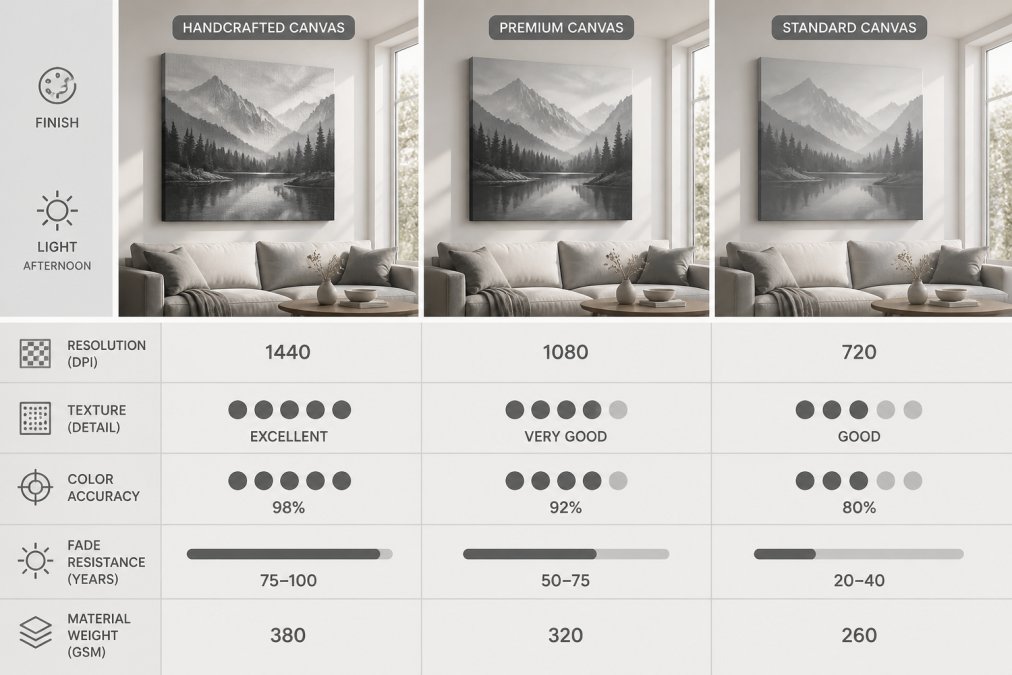
Print resolution is measured in DPI (dots per inch). For canvas printing, the minimum acceptable resolution is 150 DPI for viewing distances of 3+ feet (peer-reviewed research). However, 300 DPI produces noticeably sharper detail and richer color gradation, particularly for close viewing or detailed imagery.
For photo-to-canvas projects, start with the highest resolution image available. Most modern cameras capture sufficient resolution for canvas prints up to 24x36 inches (imaging.org). Smartphone photos often lack the pixel density needed for large prints without noticeable quality loss.
Color Accuracy and Profile Management
What you see on your monitor rarely matches what appears on canvas without proper color management. Premium services use ICC color profiles, standardized settings that translate digital colors to physical canvas accurately. This is where professional services justify their cost through calibrated monitors, color management software, and test prints.
Material Selection: Canvas Types and Finishes
Canvas materials significantly affect how your print looks and performs:
- Cotton canvas: Premium option with fine weave, excellent color absorption, superior longevity
- Polyester canvas: More affordable, slightly less organic appearance, adequate durability
- Canvas finish: Matte minimizes glare and emphasizes texture; glossy enhances color saturation and creates visual drama
Canvas texture, from smooth to heavily textured, affects how light interacts with the print. Heavily textured canvas creates visual interest and disguises minor imperfections, while smooth canvas emphasizes detail and color accuracy.
Handcrafted Texture Techniques and Sustainability
What distinguishes genuinely handcrafted canvas from mass-produced alternatives often comes down to texture techniques and material choices.
Texture Application Methods
Handcrafted texture techniques include impasto application (thick paint creating raised surfaces), collage integration (layering fabric or paper), dry brushing (minimal paint creating visible strokes), stenciling, and sanding/distressing (revealing underlying layers). These techniques require skill and intentionality, transforming a canvas from a printed image into genuine artwork with presence and personality.
Sustainability and Material Sourcing
Sustainable practices include eco-friendly canvas (organic cotton or recycled materials), non-toxic inks (plant-based or water-based pigments), responsible sourcing, minimal waste production, and durable construction. Ben Ledi Print Media's commitment to superior materials aligns with sustainability principles. By creating pieces designed for longevity rather than disposability, they reduce the environmental impact of wall art consumption.
Canvas vs. Paper: Choosing the Right Format for Your Print
The canvas versus paper decision fundamentally shapes your wall art's appearance, longevity, and emotional impact.
Canvas Advantages
Canvas offers durability (resists fading and environmental damage), texture and dimension (canvas weave creates visual depth), versatility (works with virtually any artistic style), presence (commands attention as a focal point), and mounting simplicity (hangs directly without additional framing). Canvas particularly excels for large-scale pieces and bold designs.
Paper Print Advantages
Paper formats offer cost-effectiveness, detail clarity (smooth surfaces showcase fine detail), aesthetic variety (different stocks create varied effects), framing flexibility, and subtlety. Paper suits smaller pieces, detailed artwork, and spaces where understated refinement matters.
Practical Considerations
Your choice should reflect both aesthetic preference and practical circumstances: large walls suit canvas; smaller spaces often work better with framed paper. Canvas handles varied lighting well; glossy paper can create unwanted reflections. Canvas justifies investment through longevity; paper allows experimentation and change.
Choosing between handcrafted canvas alternatives comes down to understanding what matters most: artistic quality, material durability, customization depth, or budget constraints. Ben Ledi Print Media delivers on all fronts with their handcrafted canvas prints starting at £27.00. Their meticulous design process, premium materials, and ready-to-hang convenience make them an excellent choice for anyone serious about transforming their walls into sophisticated art. Explore their collection of Highland Cow Wall Art and discover how quality handcrafted canvas can elevate your space with both elegance and personality.

Frequently Asked Questions
Q: What makes handcrafted canvas prints different from mass-produced alternatives?
A: Handcrafted canvas prints combine premium materials, archival-quality pigments, and individual attention to detail. Each piece receives careful color profiling and texture application, ensuring fade resistance and durability. Mass-produced alternatives often use lower-grade inks and generic stretching techniques. The difference shows in longevity, color accuracy, and the overall finish quality that elevates your space.
Q: What should I look for in the best custom canvas printing services?
A: Prioritize services offering high-DPI printing (300 DPI minimum), archival-grade pigment inks, and gallery-wrap or stretched canvas options. Check turnaround times, color accuracy guarantees, and customer reviews on fade resistance. Verify they use UV-protective coatings and offer multiple material choices. Services that provide digital file preparation guidance and return policies for color mismatches demonstrate genuine commitment to quality.
Q: Are custom pet portrait canvas print services worth the premium price?
A: Yes, when comparing quality metrics. Custom pet portrait services use professional photography or digital artwork, apply color correction for accurate rendering, and print on premium canvas with fade-resistant inks. The result lasts 10+ years without noticeable color loss, whereas budget alternatives fade within 2-3 years. For meaningful subjects like pet portraits, the investment pays off through longevity and visual impact.
Q: How do I prepare my digital file for the best print results on canvas?
A: Ensure your image is at least 300 DPI at your intended print size. Use RGB color profile (not CMYK) for screen-to-print accuracy. Check that your file format is high-quality (TIFF or PNG preferred over JPG). Resize your image to match your canvas dimensions before uploading to avoid stretching. Many custom canvas services offer free file reviews, use this to confirm resolution and color profile before printing.
This article was written using GrandRanker