
Table of Contents
- What Causes Canvas Prints to Warp
- How to Prevent Canvas Prints from Warping: Environmental Control
- Choosing Quality Stretcher Bars and Frame Rigidity
- How to Tighten a Saggy Canvas: Restretching Techniques
- Canvas Print Maintenance Tips for Long-Term Protection
- Preventing Warping in Different Living Environments
- Conclusion
Last Updated: August 21, 2026
What Causes Canvas Prints to Warp
Canvas warping occurs when the material loses structural integrity due to environmental stress rather than manufacturing defect. The problem typically falls into two categories: mechanical warping (where the stretcher bars or frame bends or twists) and chemical warping (where moisture, temperature fluctuations, or UV exposure cause canvas fibers to expand and contract unevenly).
Even premium canvas prints from reputable makers like Ben Ledi Print Media can warp if stored or displayed incorrectly. The difference between a canvas that stays taut for decades and one that sags within months usually comes down to environment and maintenance, not initial craftsmanship.
The real culprit in most cases is humidity. Canvas is made from cotton or linen fibers that absorb moisture from the air. When humidity spikes, fibers expand; when it drops, they contract. This constant movement stresses the tension holding the canvas tight against the stretcher bars, eventually causing it to lose its grip.
How to Prevent Canvas Prints from Warping: Environmental Control
Preventing warping starts with controlling the environment where your canvas lives. The fixes are straightforward and don't require expensive equipment.
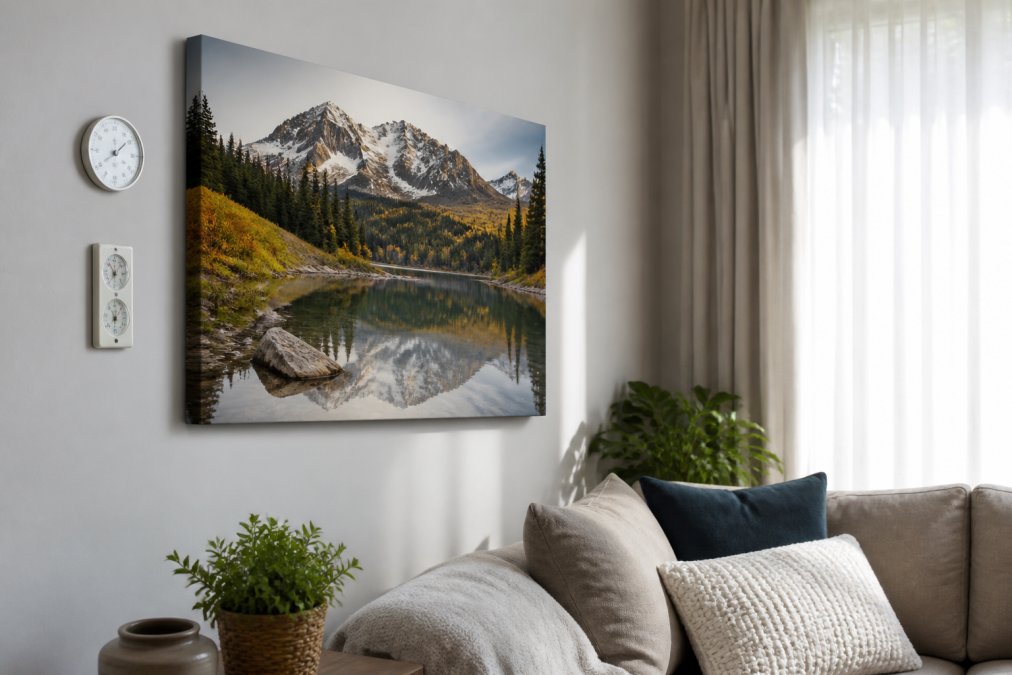
Best Humidity Levels for Canvas Art
The ideal humidity range for canvas art is between 30% and 50% relative humidity (si.edu). This narrow window keeps fibers stable without excessive expansion or contraction. Most homes naturally fall within this range, but seasonal changes and poor air circulation can push levels outside the safe zone.
In humid climates, a dehumidifier is worth the investment. Set it to maintain 40-45% humidity in the room where your canvas hangs. In dry climates, heating systems can drop humidity to 20% or below, causing fibers to shrink and lose tension. A humidifier helps, but improving air circulation is simpler, open windows on dry days and avoid placing canvas directly above heat vents or radiators.
Check humidity levels with an inexpensive hygrometer (under £15). Place it near your canvas and monitor readings weekly to see if your environment is stable or if seasonal swings are stressing your canvas.
Temperature Stability Matters
Temperature fluctuations stress canvas fibers almost as much as humidity changes. The goal is consistency, not a specific temperature. A room that stays at 18°C year-round is better than one that swings between 15°C and 22°C.
Avoid hanging canvas near windows, exterior walls, or heat sources. Sunlight creates localized heat that the back of the canvas can't dissipate evenly, causing uneven expansion. Similarly, placing canvas above a radiator or heat vent creates a temperature gradient that weakens tension over time.
If you have air conditioning, set it to a consistent temperature rather than letting it swing between comfort levels. Consistent temperature beats efficiency savings when protecting artwork.
Choosing Quality Stretcher Bars and Frame Rigidity
Quality stretcher bars are made from kiln-dried wood with high density and straight grain. Kiln-drying removes moisture during manufacturing, reducing the wood's tendency to warp later. Pine is cheap but soft and prone to bending. Spruce and fir are better. The best stretcher bars use hardwoods like poplar or composite materials that resist warping entirely.
Frame rigidity depends on wood thickness and cross-sectional shape. Thicker bars (typically 1.5 to 2 inches) resist bowing better than thin ones. A bar with a deeper profile provides more structural resistance than a shallow one of the same thickness.
Ben Ledi Print Media uses carefully selected stretcher bar materials chosen for stability and longevity. Corner joints are a common failure point. Cheap frames use simple butt joints held together with staples. Quality frames use mortise-and-tenon joints or reinforced corners that distribute stress across a larger area, preventing corners from separating as wood naturally moves with humidity changes.
How to Tighten a Saggy Canvas: Restretching Techniques
If your canvas has already started to sag, restretching can bring it back to life. This involves removing the canvas from the stretcher bars, tensioning it properly, and reattaching it.
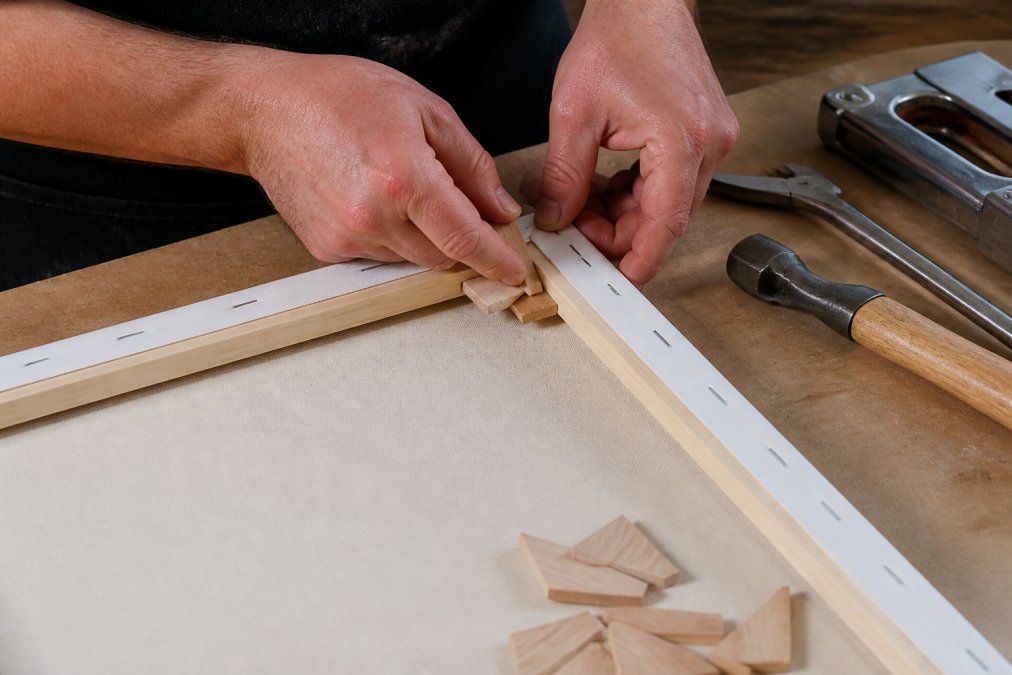
For a DIY approach, you'll need the canvas, stretcher bars, a staple gun, staples, and a tensioning tool (a wooden wedge works). Start by carefully removing old staples with a flathead screwdriver or staple remover. Work from the center of each side outward to avoid tearing the canvas.
Lay the canvas flat and position the stretcher bars underneath. Pull the canvas taut toward one side, starting at the center of each edge. Staple as you go, working in a cross pattern (top, bottom, left, right, then repeat). This distributes tension evenly and prevents bunching at corners. Aim for drum-like tension, the canvas should feel firm but not painfully tight.
Using Corner Keys to Maintain Tension
Corner keys (also called wedges) are small wooden blocks that fit into slots on the inside corners of stretcher bars. As you push the wedges deeper into the corners, they force the stretcher bars apart slightly, increasing overall tension on the canvas.
To use corner keys, start with them only partially inserted. Tap them in gently with a mallet, checking canvas tension as you go. You should hear the canvas "ring" slightly as it tightens. Stop when the canvas feels drum-tight. Check the keys every 6 months, wood naturally shrinks and swells with humidity, so wedges may loosen over time. A quick tap to re-seat them takes seconds and prevents sagging before it starts.
Adding Cross-Braces for Extra Support
For larger canvases (over 60cm in either dimension), a single set of stretcher bars isn't always enough to maintain rigid tension (peer-reviewed research). Cross-braces, additional wooden supports running diagonally or horizontally across the back, prevent the frame from flexing and the canvas from developing center sag.
Cross-braces are most effective in an X pattern or as a single horizontal brace running through the center. For smaller canvases (under 50cm), cross-braces are usually unnecessary if the stretcher bars are quality wood and properly constructed. But for anything larger, especially if displayed in a room with temperature or humidity swings, a brace is cheap insurance against future warping.
Canvas Print Maintenance Tips for Long-Term Protection
Maintaining a canvas print doesn't require special products or complicated routines. Most work is environmental, but a few active maintenance steps prevent problems before they start.
Proper Storage Orientation
How you store a canvas when not on display matters as much as how you display it. Leaning it against a wall at an angle pulls the canvas away from the stretcher bars, creating permanent stretch marks. Store it flat on a clean surface or hang it vertically on a wall.
If storing temporarily, wrap it loosely in acid-free paper to protect it from dust and light. Don't seal it in plastic, which traps moisture and can cause mold (si.edu). Store it in a climate-controlled room at 40-45% humidity and around 18-20°C. A bedroom closet is better than an attic or basement, which typically have wider temperature and humidity swings.
Never stack multiple canvases flat on top of each other. Stand them upright (leaning slightly against a wall) with spacers between them to prevent frames from touching.
Protecting Against UV Exposure
Sunlight fades canvas prints and creates uneven heat that stresses fibers and frame. Hang your canvas on a wall that gets indirect light, or use UV-protective glass or acrylic if it must be in a bright room.
UV-protective coatings can be applied to the front of the canvas during printing. Ben Ledi Print Media offers options for UV protection that extend color vibrancy while providing a protective barrier against environmental stress. Curtains or blinds help control both light exposure and temperature swings.
Preventing Warping in Different Living Environments
Different climates and living situations present different challenges.
Coastal and humid climates: Invest in a dehumidifier and run it year-round. Keep air circulating with fans. Check corner keys and tension every 3 months instead of twice yearly.
Dry climates: Use a humidifier during winter heating season. Avoid hanging canvas directly above radiators or heat vents. Maintain consistent room temperature with a programmable thermostat.
Basements and attics: These spaces are poor choices for displaying canvas due to wild temperature and humidity fluctuations. If you must store canvas there, use a sealed container with desiccant packets to maintain stable conditions inside.
Rented apartments: Canvas prints are ideal for renters because they're temporary and removable. Use damage-free hanging hardware. When moving, pack the canvas flat in acid-free paper and store it in a climate-controlled space. Tension may loosen slightly during storage, but corner keys will bring it back to taut condition quickly.
Rooms with pets: Avoid hanging canvas at pet height where a tail wag or jump could stress the frame. Keep room temperature consistent, as pets often trigger frequent heating or cooling adjustments. Dust accumulates on canvas near pet activity, so check it monthly and gently wipe with a soft, dry cloth.
Canvas prints don't have to warp. The difference between a print that stays pristine for decades and one that sags within months comes down to environment and attention. Control humidity and temperature, choose quality stretcher bars, maintain corner key tension regularly, and your canvas will stay taut and beautiful. Ben Ledi Print Media's handcrafted canvas prints are built to last, but they need a stable home to thrive. By following these prevention and maintenance steps, you're protecting not just the frame and fibers, but the investment you've made in transforming your space into a sophisticated work of art.
Frequently Asked Questions
What causes canvas prints to warp over time?
Canvas warping occurs when moisture, temperature fluctuations, or structural stress cause the fabric and frame to shift. Humidity causes fiber expansion, while temperature changes create thermal stress. Weak stretcher bars or uneven tension distribute stress unevenly, leading to sagging corners and visible warping. Mechanical warping from frame movement differs from chemical warping caused by environmental exposure, but both damage the artwork's appearance and structural integrity.
What are the best humidity levels for canvas art?
Maintain humidity between 45% and 55% relative humidity for optimal canvas preservation. Below 40%, canvas fibres become brittle and prone to cracking. Above 60%, moisture causes excessive expansion and mold growth. Use a hygrometer to monitor levels in your home. In damp climates, consider a dehumidifier; in dry regions, a humidifier helps stabilize the environment. Consistency matters more than perfection, gradual fluctuations are less damaging than dramatic swings.
Can I tighten a saggy canvas at home?
Yes, you can tighten a saggy canvas using corner keys, small wooden wedges inserted into slots on the back of stretcher bars. Gently tap them in to increase tension across the canvas. For more severe sagging, remove the canvas and restretching it on new stretcher bars may be necessary. If the frame itself is warped or the wood has lost structural integrity, reinforcing with cross-braces or replacing the bars is more effective than tensioning alone.
How should I store canvas prints to prevent warping?
Store canvas prints flat or vertically in a climate-controlled space away from direct sunlight, heat sources, and moisture. Keep them in acid-free packaging or wrapped in breathable cloth. Avoid stacking heavy items on top or storing in basements, attics, or garages where temperature and humidity fluctuate dramatically. If storing for extended periods, check them monthly for signs of warping or mold. Gallery-wrapped canvases and canvas panels require the same environmental care as stretched canvases.
This article was written using GrandRanker